
Ted Sablay
How Ted Sablay found the overlap in his Venn diagram
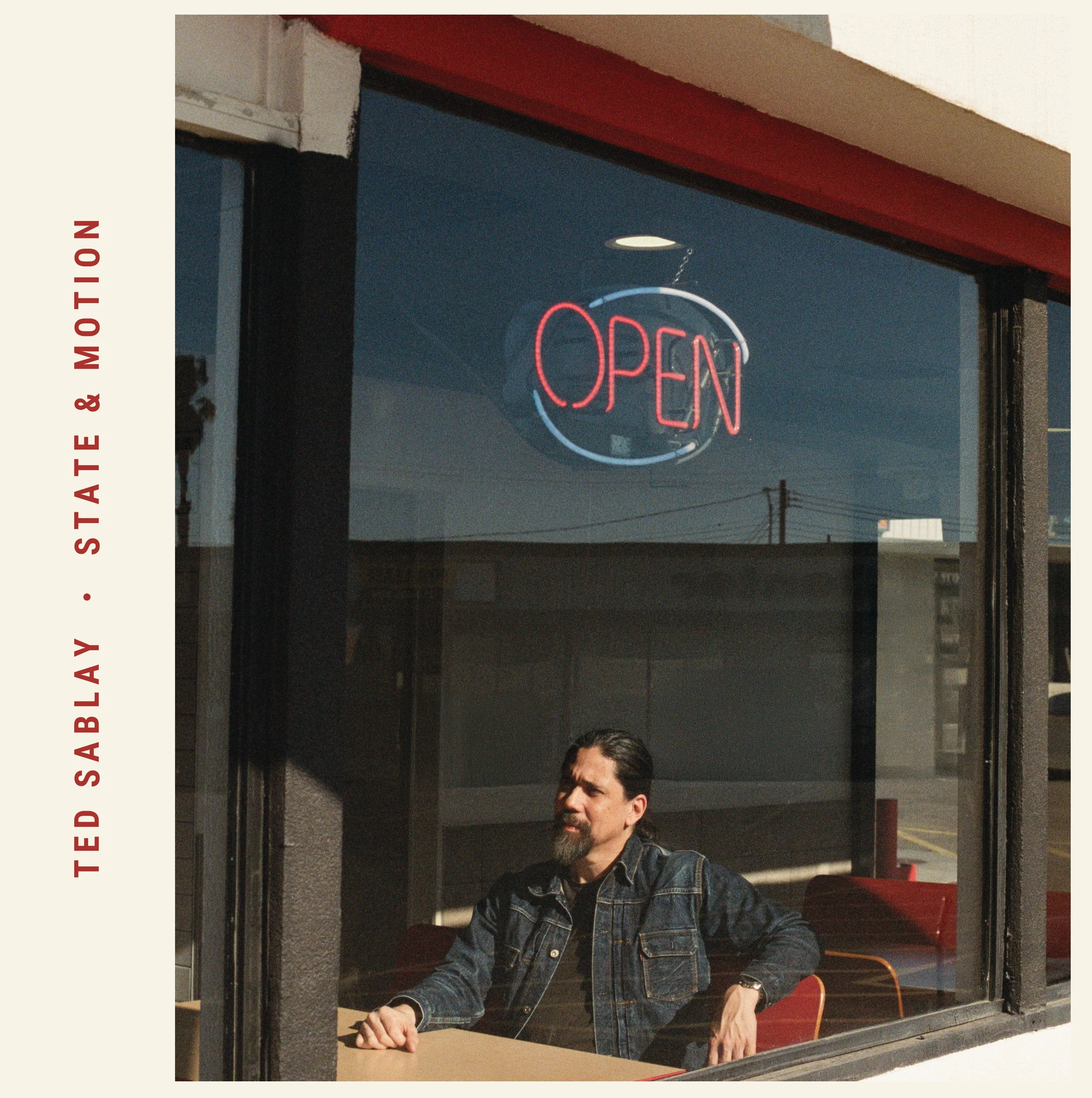
With State & Motion, Ted Sablay gives us a glimpse into another side of his musical life beyond his role as touring musician and musical director of the world-famous American band The Killers. The record, released September 25, features Pete Thomas (Elvis Costello & and the Attractions) and Whynot Jansveld (the Wallflowers) on bass. Concertology got to listen to the new album, four years in the making, and spoke with Ted about how it came together.
You describe State & Motion as being about the difference between bearing something and choosing something. When did you realize that was what the album was about - or was that the idea from the beginning?
Good question. I didn't realize it until a few songs in. The way I write is instrument first - usually piano, maybe a guitar riff. Get the music going first and then on top of that I sing wordless sounds or filler words, nothing that means anything. But when I started replacing the filler words with actual words, it started clustering around these themes. The songs stacked up and the next thing you know there is a number of them about the same subject matter - usefulness, self-authorship, those things. It just kind of emerged.
You spent four years working on these ten songs. How do you know when something needs another rewrite versus when you're just overthinking it?
I usually don't know until months afterwards. That's one reason it took long. I wrote most of these songs a few years ago, but it's been the listening and re-listening, having people play on them, getting past the initial excitement of having created something. Let it settle, then listen a few weeks later and ask: is that what I actually want? Is it finished? Is it where I want it to be? Throwing it on a playlist with finished songs by other artists I look up to helps too. So some of it is "this feels finished, I'm not going to touch it." And some of it is - well, I think it's finished, and then you play it alongside a U2 record and you go, oh God, I have to work on this more.
There seems to be a recurring character on this record: the person everyone relies on. How much of that came from your own life?
It's less about any one job and more about my life overall. I'm the youngest of six kids, my dad's a physician, my mom was a nurse, and he came here from the Philippines. Nobody ever said it out loud, but the message in that house was pretty clear: if you're not saving lives or doing something important, what are you doing? So I was raised to be useful, and I got good at it. Most of this record is me working out what I'm worth on a day when I'm not useful to anyone.
If you're the person who's good at figuring things out and executing, that becomes who you are to everybody. And it's nobody's job to stop and ask what you'd do if you were the one in the driver's seat. I got to my forties before I noticed I'd never taken the time to develop a vision for my own life or learn to want things on my own behalf. Nobody discouraged it. It just never came up.
What's the biggest thing you learned about songwriting between your first album and this one?
This time around, I wanted the lyrics to age a little better. On the first record my method was: come up with a good line, then come up with another good line. Collect enough lines and you've got a song, collect enough songs and you've got a record. I'm proud of it, but there's no system in that, so the songs can sound unrelated to each other. Before a film shoots, the script’s structure gets locked, because everything after that costs money. I started wondering what would happen if I treated lyrics that way. So now I write the music first, sing nonsense over it until real words start showing up, and then figure out what the song is actually about. I started calling that the “controlling idea,” borrowing the term from Robert McKee's Story: Substance, Structure, Style, and the Principles of Screenwriting. Then I go back and rewrite everything in service of it.
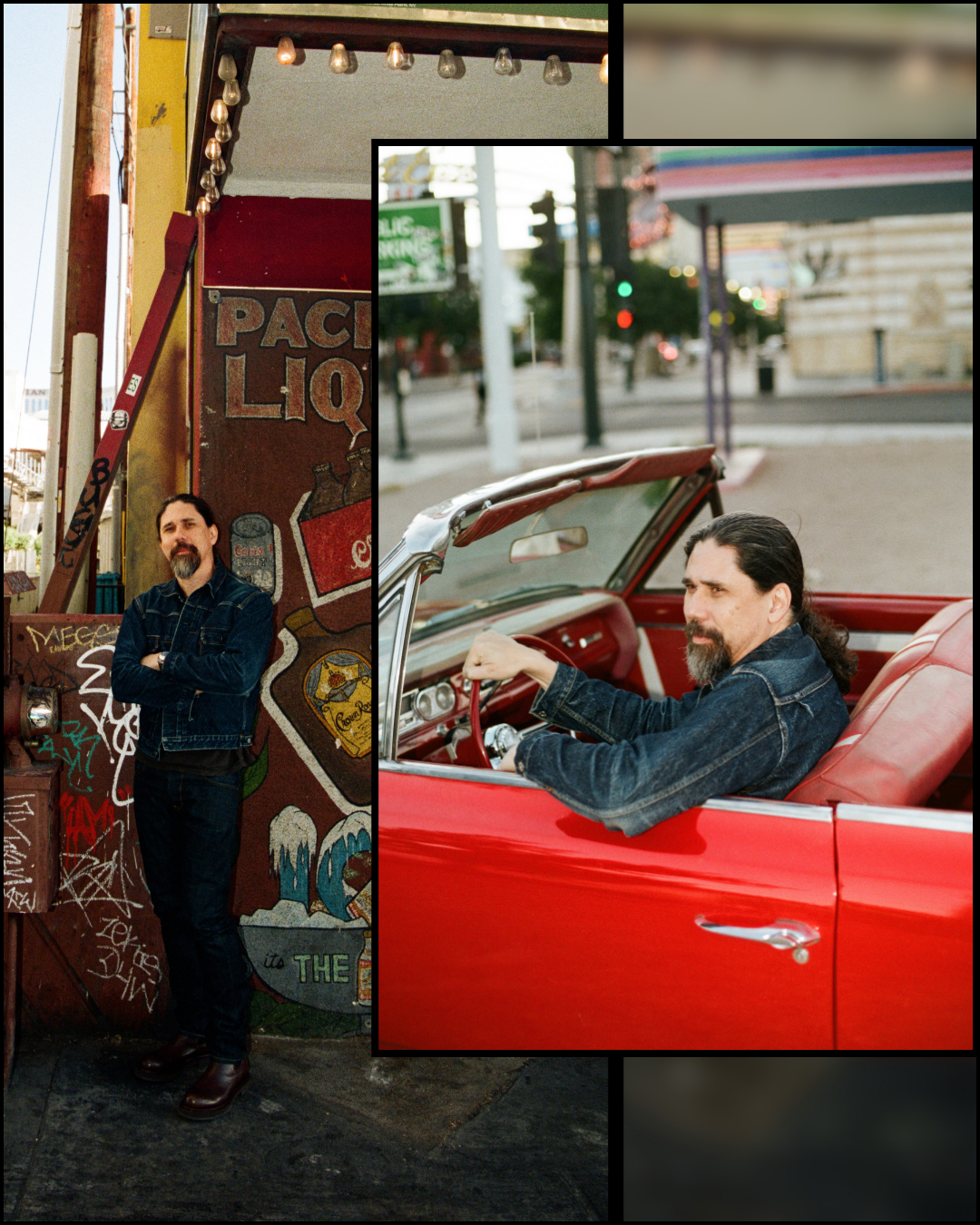
“My contemporaries were raised on Fleetwood Mac, but I grew up listening to the artists that Fleetwood Mac was listening to, all of whom were influenced by early rock ‘n’ roll.”
Do you think being a musical director has made you a better songwriter?
Being a musical director taught me the difference between a vibe and a song. I love production and arrangement, but sometimes you listen to something and realize there's no song at the root. My test now is whether I could hand the song to somebody else to play and have it still sound good, assuming they know how to play a song. I used to think if I wanted a chorus to feel bigger, the only way to do that was to layer a ton of guitars or synths, but I realize now that thinking is wrong. There are other options. You could change the rhythm, come in at a different spot in the bar, and/or make the ideas arrive faster. It has nothing to do with adding more stuff. Use the arrangement to enhance the song, but don't rely on it to make the song good. I made a rule this time that every song had to hold up with one guy and an acoustic guitar. On the first record I layered until there were ninety tracks, and then I'd go play those songs live and they'd fall short, because what people liked was the production.
With The Killers, I'm not involved with the songwriting. Based on what they lay down, I help implement the arrangements. That's very cool work, and they're great — I've learned so much. I've been with them for 20 years now. You learn a ton about how to put things together, and you get to observe people writing, which is great.
What else inspired the sound of the record?
My dad is 95. He was already a father of three and into his career when the Beatles happened, and he doesn't know who Fleetwood Mac or Bruce Springsteen are. My brothers are a lot older than me, so I got their records. My contemporaries were raised on Fleetwood Mac, but I grew up listening to the artists that Fleetwood Mac was listening to, all of whom were influenced by early rock 'n' roll. One of the records I wore out as a kid was the La Bamba soundtrack — Los Lobos, Brian Setzer, Marshall Crenshaw playing '50s rock and roll in the '80s. That energy is still what I'm after.
You grew up discovering music through records that were already a generation removed from you. What do you miss about the way people used to discover music?
I miss going to a big record store, wandering around and stumbling onto things I never would have listened to otherwise, and then really being turned on by it — and that becomes this new thing I'm into. It wouldn't have happened any other way.
Now, on Spotify, the best you get is "if you like this kind of music, you might like this." Which is fine, but it's suggesting based on how something sounds. I miss being in a record store and going, I'm going to listen to this because that album sleeve is cool.
I remember the first time I heard Blondie. I'd heard them, but I didn't actually listen until I saw Debbie Harry and went, who's that? And then you listen. Record stores had magazine stands, too, and you could just sit down and read. I always loved going to a record store for three hours and running into things I never knew existed. I guess that can still happen, but with the algorithm you kind of get more of what you're already into. For better or worse. Speaking about this makes me realize why I make excuses to go to the coffee shop down the road: they play the best music in there. A lot of it I've never heard before, so I'll sit there on a break with a coffee and Shazam things. So you can still find it — but back in the day, because it was the only way, it happened a lot more. I do miss that.
After everything you’ve done, with The Killers, as a musician, and now as a solo artist, how did you figure out what you wanted to do with your own music?
At some point you have to work out what you're actually interested in, what you're actually capable of, and what the world actually has available for you. There's a Venn diagram in there somewhere. This record is the first time those three overlapped for me.
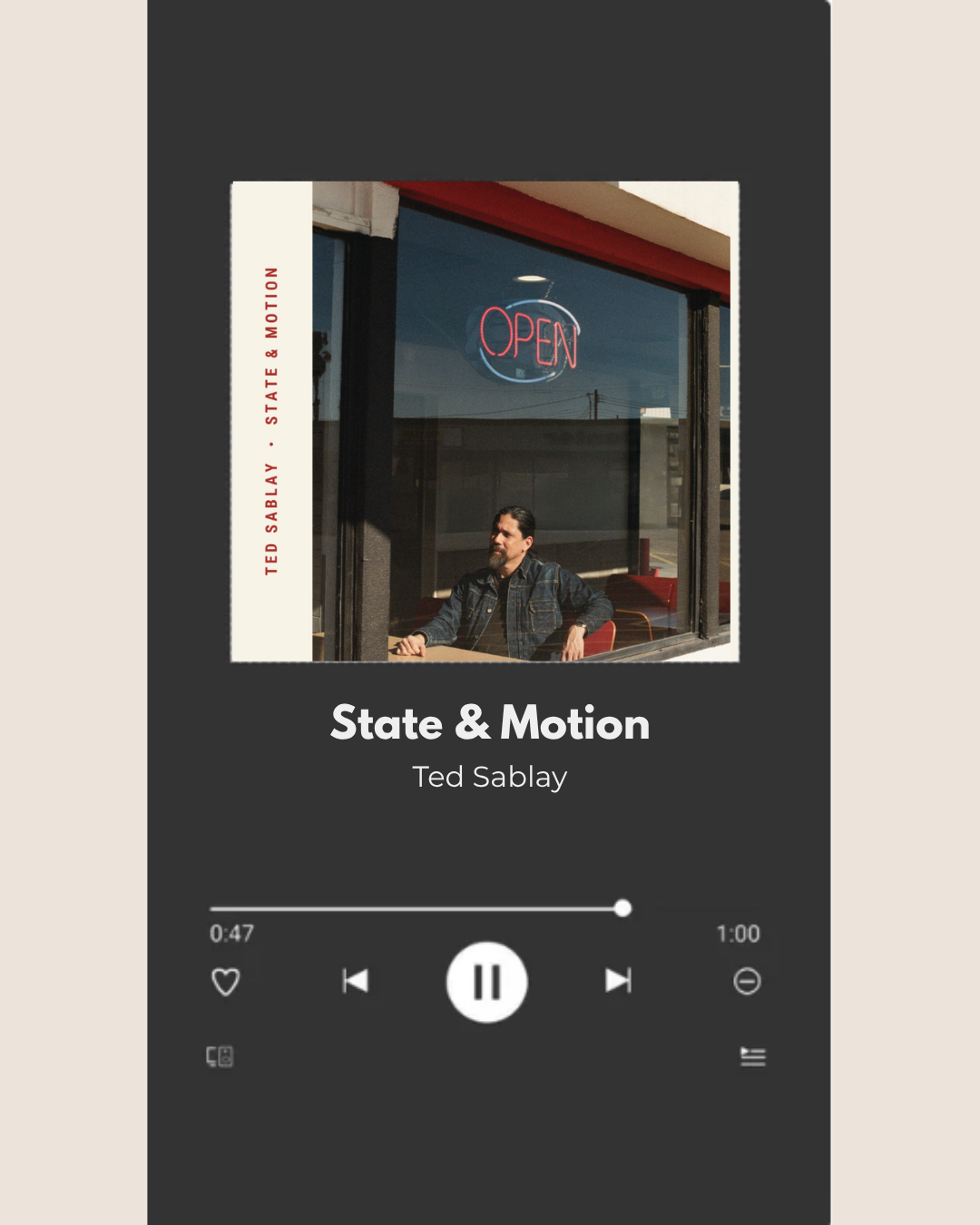
Click on the picture below and listen to Ted Sablay’s new album ‘State & Motion on Spotify.
Follow Ted Sablay on Spotify