
Henry Hey
An interview with Henry Hey about working on Rebel Rebel
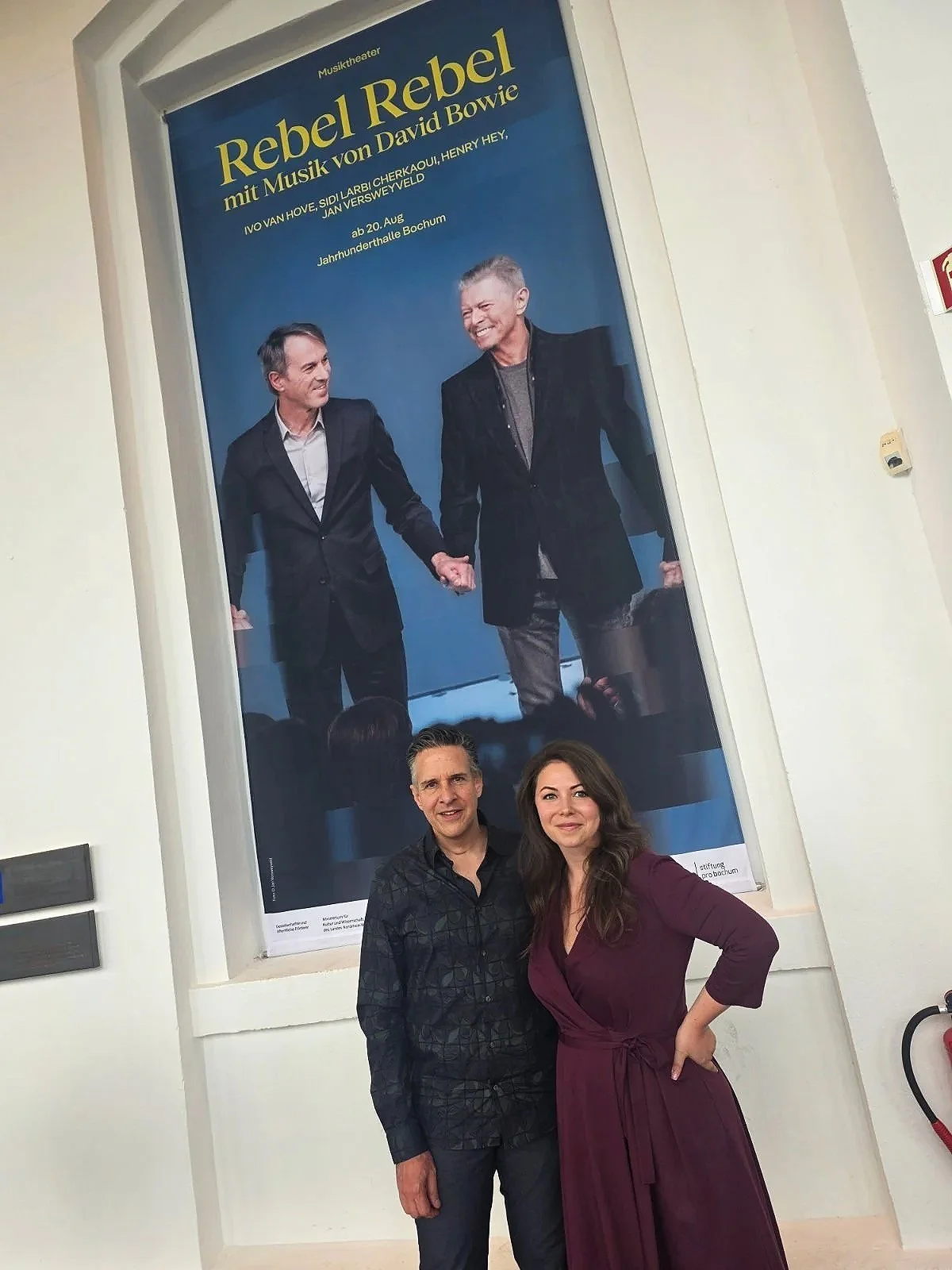
The world held its breath for months after the news came early in January 2016, that David Bowie had passed away. Such a strange realisation, as he was so much in the middle of the conversation at that time. He just released a new album (Blackstar) and New York had seen the first successful run of his musical (Lazarus). Now it is 2026. Ten years without David Bowie. Is how we look at him and his vast body of work shifting towards new understandings, new interpretations? Concertology spoke to Henry Hey in Bochum during the Ruhrtrienalle 2026, where he performed on Ivo van Hove’s dance-music hybrid Rebel Rebel.
You worked closely with David Bowie on Lazarus when he was actively involved in shaping the piece. In contrast, with Rebel Rebel, you are creating the work with his legacy hovering over you. How does that change the creative process?
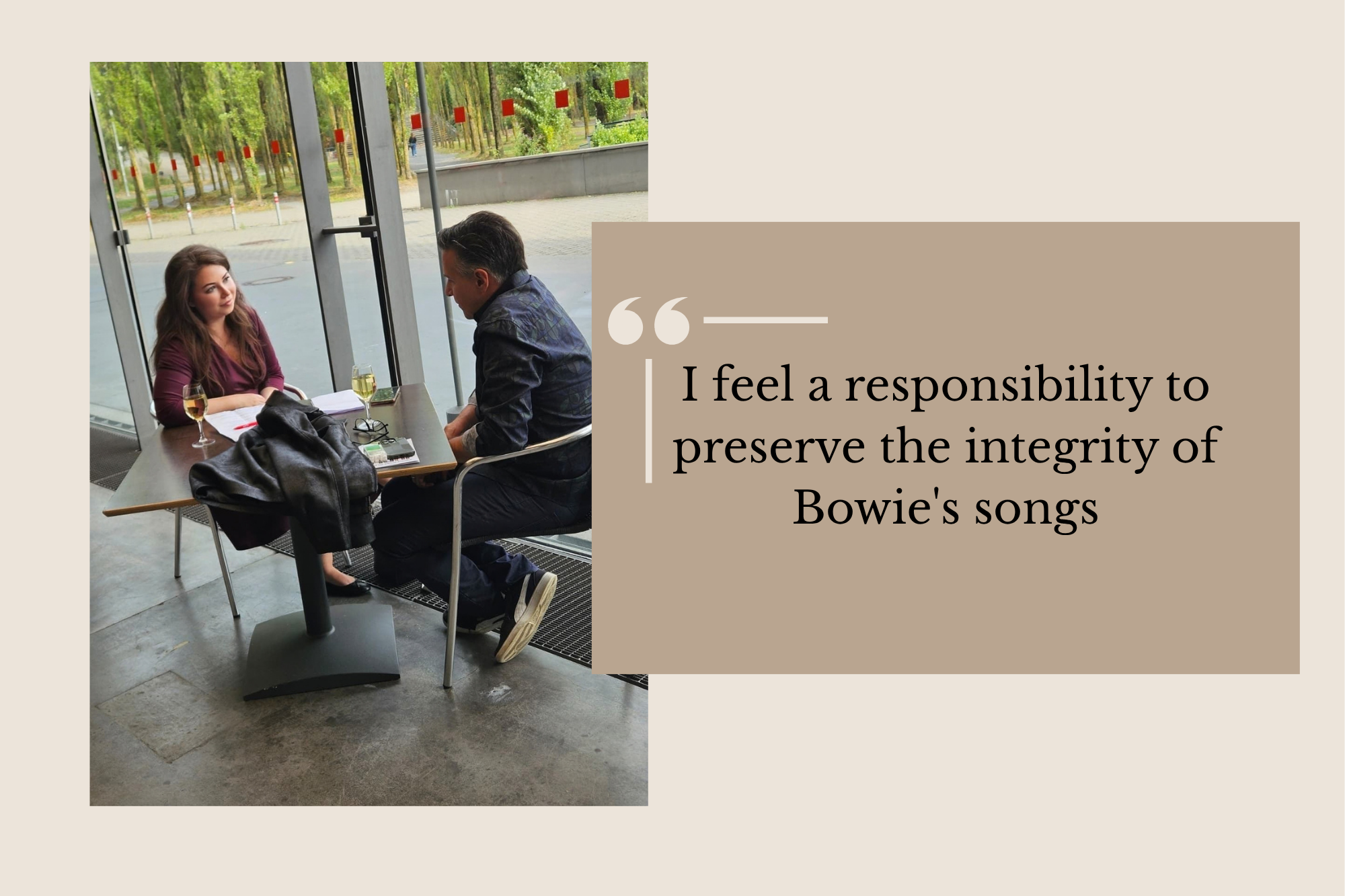
It feels great to be working on his music always. I feel a responsibility to preserve the integrity of the songs and I think that the musicians and actors have done an incredible job of doing that. The feeling of the song is important and the way the song works. I was lucky to have the help of my fellow Bowie veterans in working with some of these musicians. In fact, I had Zoom calls with my two guitarists in this production with Marc Plati and Gerry Leonard. We talked about parts; how each part worked when they did it live with David. This is about as close as you can get to figuring out how things are going to work live in this setting and I feel like, without having David here, it is a really great reference that I have friendships with all those band members. I can get on the phone with Gail Ann Dorsey or Sterling Campbell, so I have richness of resources through these people and of course David is not here, but I think we have done a good job of preserving his music, the spirit and energy of it. I think that anybody who has seen Rebel Rebel will understand the emotions are vibrant and they are very alive and energetic and that is very important for any songs and any artist.
How was the Rebel Rebel project conceived?
The project was conceived by Ivo van Hove and his partner Jan Versweyveld. Ivo had a story in mind and he constructed it using the text and emotion of David’s songs in a specific order. Ivo listened to over 400 Bowie songs when selecting the songs for this piece, that’s quite something. I think it is really intelligent the way that it works, that the story is told through the lyrics. There is very little spoken text, it is mostly lyrics, and then it is up to the audience to gather their own feelings around it, which I think makes a great work of art. I think that art should leave people asking questions, give them an opportunity to have a different perspective from their friend sitting next to them. Then you're really given something enriching through art that way.
What is the main message of the play for you?
I think it is a message of redemption and individuality. I am not going to try to sum it up, but I think this is a message of love and connectivity in a time, at least the setting of the play, where isolation is more the norm. That could speak to the way we live these days, with people being isolated, not coming together as much as they used to before the pandemic and before everyone was on their phones all the time.
Nowadays, we are going to church concerts listening to Mozart and how his work is reinterpreted in our time. This is surely a future that awaits David Bowie’s legacy. You are still of a generation that worked with David first-hand. What do you think will change when people try to re-interpret his legacy in 30, 50 years from now?
I think everybody will have their own vision about who he was, what his art lives on to be. Nobody alive today knows what Mozart was like and even people who perform Mozart are kind of taking a guess because there are no recordings. At least we have recordings and video of David. One of the things that I think some people get wrong about David is that the visual is not always the intent. I think that some songs, the visual of what David offered might be a contrast to the intent or feeling of the song, but I think David would say it is for each person to decide what that is, just like this play, just like any art.
“If you don’t know David Bowie’s music, you might think he is just a pop musician, but actually we know there is much more to it than that”
Is there a song in Rebel Rebel that you would pinpoint as being the most obscure choice?
There are so many obscure songs and I have to admit there were several songs I did not know because David has so many of them. As one of the people who are still caretakers of Bowie music, I have a chance to keep discovering, keep learning, and I learned a bunch this year working on this music.
I started working on this a bit in March, but the agreement with the production had not yet been finalised back then. I was sort of worried we were going to run out of time. In April everything seemed like it was in place and I worked April, May, June till the beginning of July pretty much every day, without a break or any days off. I had other people working on it with me, Chris McQueen and Brian Delaney, who worked on Lazarus; a former student, a copyist, people helping with drum programming. It was a tremendous amount of time, coordination with musicians, actors, dancers and Ivo. Most of the material was completed by the beginning of July, including the addition of vocals from Lucy Woodward and Everett Bradley. Everett worked with David Bowie, he is part of the Cutting Room concerts in January, he is a tremendous vocalist. We teamed up and worked even on the 4th of July on this, in my home studio. Afterwards I spent another 5-6 days editing and mixing, so it was a lot of work, even through the summer. The songs had been chosen since January and I started talking to Ivo about this last year. This was while I was working with him on another production called I did it my way, also here at Ruhrtriennale. A similar concept but very different music.
How has your collaboration with Ivo van Hove changed through the years, especially since you worked on Lazarus together already in 2014-2015?
We know each other well. I would say that we have become friends, not just professional colleagues. There is a trust there; working with someone for so many years and feeling there is a fit and starting to understand each other’s motivations, which is a great thing. I know his working style and we know each other well enough that we poke fun at each other all the time. This festival has been more about classical music and high art, purely artistic art, art that might be unapproachable for some people. If you don’t know David Bowie’s music, you might think he is just a pop musician, but actually we know there is much more to it than that. I think David Bowie will, as you said, end up alongside great composers and great artists in a timeless way. Ivo wanted to offer something more approachable that would be available for a lot of people to experience, make this attractive to more people, because the purpose of an art festival is to have people come and experience the art. Not have anyone feel excluded or not have something that people feel like they can’t connect with.
We spoke earlier about playing Bowie’s music as therapy, both for artists and the fans. You yourself are part of an elaborate group of (mostly) Bowie alumni that perform his work every year in New York. Is Rebel Rebel also a therapeutic event?
Obviously, Ivo chose all of these songs to fit the story of Rebel Rebel, so I didn’t have any choice in the songs. Some of the songs will be more familiar, some less, my job as a musical director in any situation is to bring the best of the vision of the artist, in this case Ivo and David, and the integrity of the music. I wanted to choose the right musicians, I helped with the casting of the actors, I wanted to make sure that the music was going to have the highest level possible and it feels very personal for me because it’s David. It is a similar feeling and I am very lucky because I think if you talk to any of the actors, dancers or band members , they would say it feels like a family. It really does. Everybody is really lovely and they are all after making the best music possible. They are all very excited to be with one another and be a part of creating this thing. There is a real feeling of a group, part of that is that the music is so joyous.
Was it a similar feeling with the Lazarus cast?
Yes, but this even more so. I think because the work has been so intense in such a short amount of time and because there is so much music that happened so quickly, it just intensifies the feeling. Everyone is working really hard on stage and then it is a wonderful feeling when we’re done.
Did you have total freedom with reinventing the songs?
Actually, we talked about it and we decided to keep a lot of them as close to original as possible, especially the obscure ones. We have some songs from his first album [David Bowie, 1966] and with those especially it felt like we should not change them, Ivo and I were on the same page about it. I am only going to change things if there is a reason. I want the music to serve the play, just like David wanted his music to serve the play in Lazarus. Thinking about the energy of what happens in the play and I think Ivo chose very well that it did not warrant any changes and I did not want to alter things just for my ego sense. I could rewrite things, I could change the interpretations so that I could put my stamp on it but it did not make sense to me to do a lot of that. I wanted to keep things as pure as I could and adapt them for the small band. There are two pieces that were re-worked, you will just have to see which ones.
The review of Rebel Rebel made by Concertology can be read here.