
Henry Hey
Review Rebel Rebel | Ruhrtriennale Festival der Künste — Bochum
How do you inherit David Bowie?
Ivo van Hove and the first generation of Bowie legacy-keepers
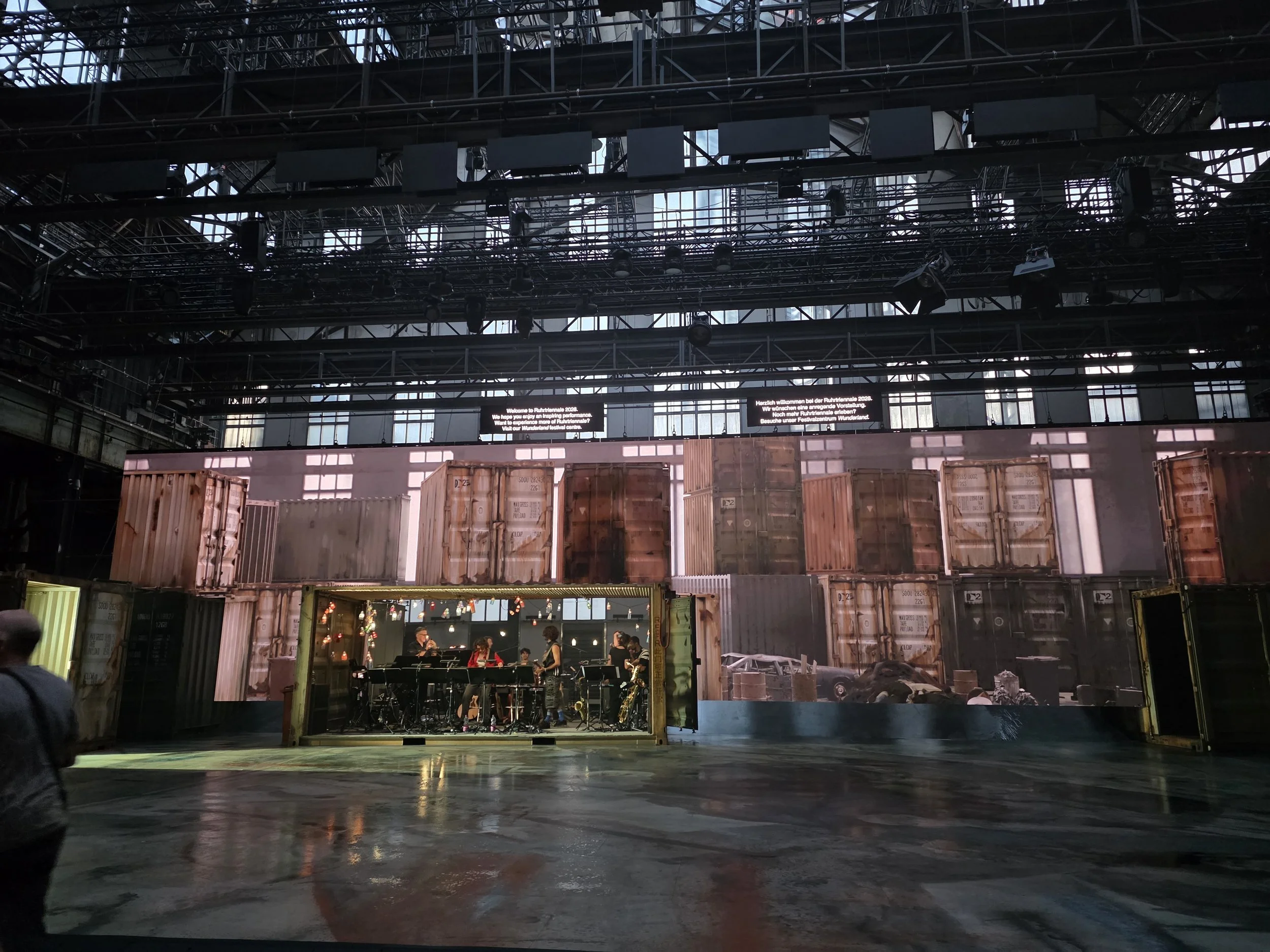
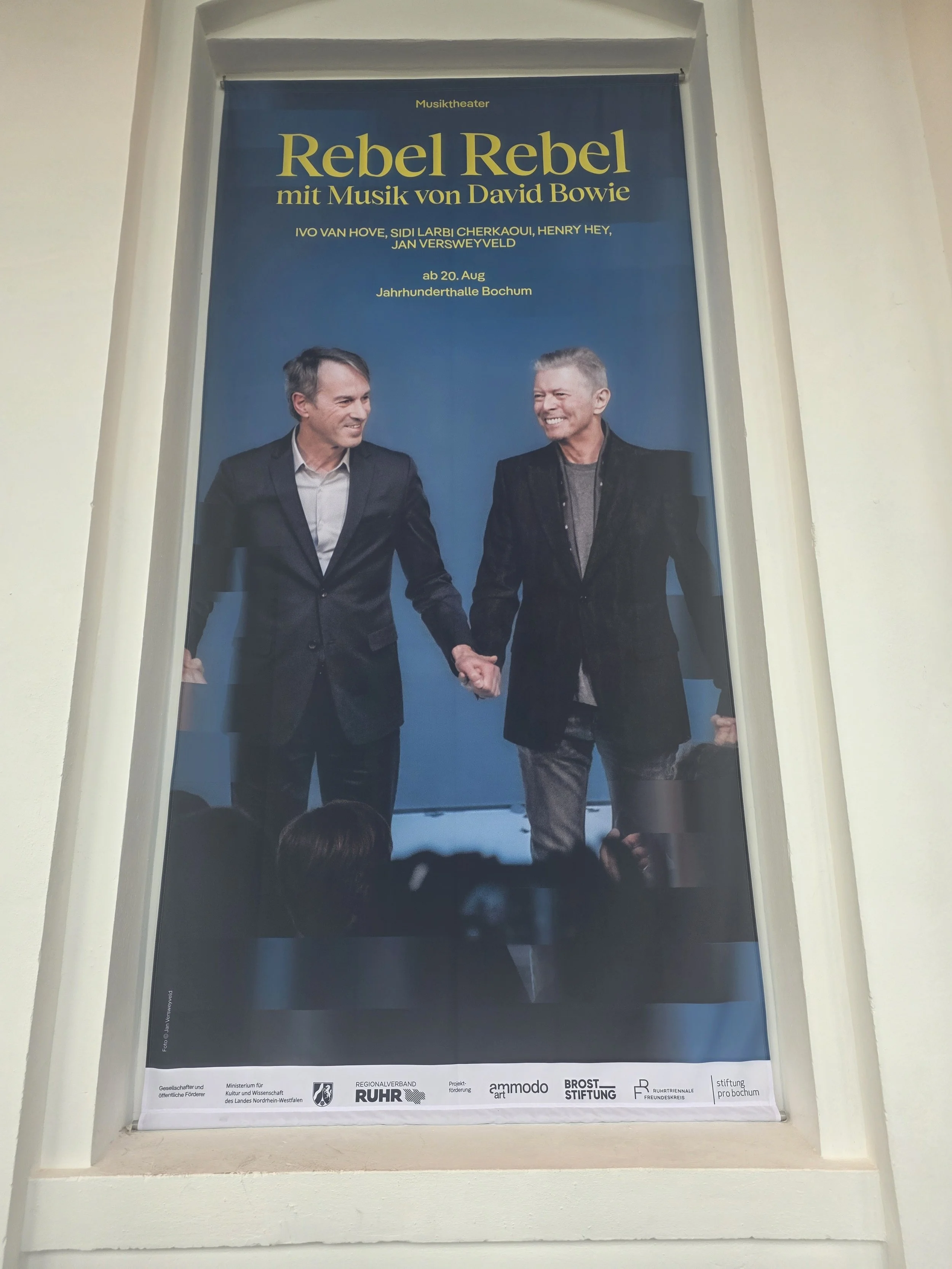
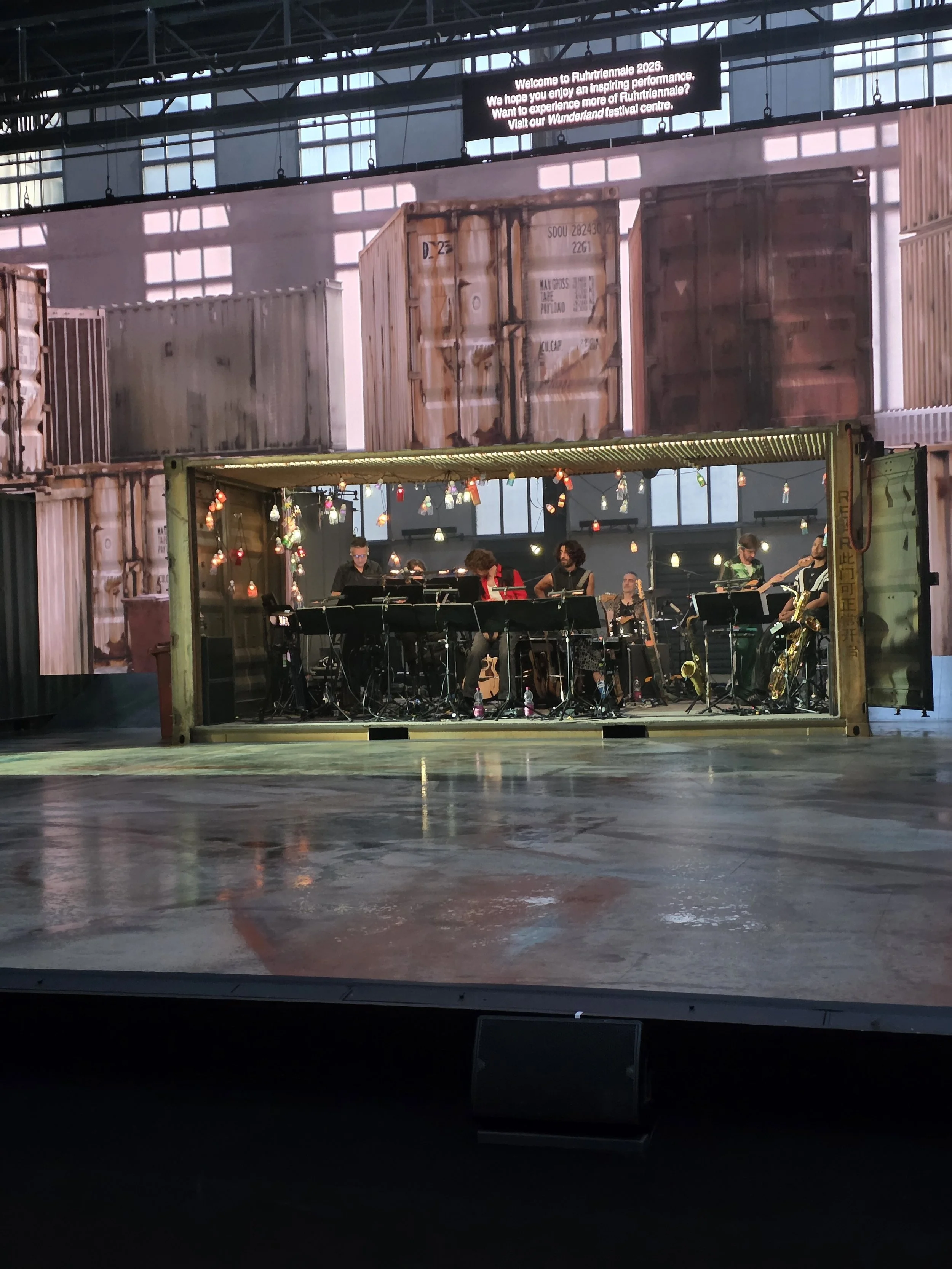
My father owned a record called "The World of David Bowie". On the cover, a striking photo of Ziggy Stardust: a sheer shirt, a provocative pose, the fiery red hair. But sadly, this record contained nothing but obscure songs previously released on the Deram label that had nothing to do with the Starman's later success. Bowie's first steps from that Decca era were dramatically over-produced trifles, though with the occasional undeniable gem tucked in between. You can't help but wonder what these songs might have become had they been written in a different era, produced by someone else. We caught a glimpse of that during Rebel Rebel, the closing piece of Ivo van Hove's three-year reign as director of the Ruhrtriennale Festival der Künste. Rebel Rebel turned out to be a hybrid production in which a live band led by Henry Hey (alumni from the Lazarus musical) played nearly 30 Bowie songs, while energetic dancers and singers carried the story across the stage. In Ivo van Hove's selection, a story emerges of love in a time of autocracy. In fact, love is forbidden. The lead characters Boy (Diego Rodriguez) and Girl (Ari Notartomaso) circle each other in an act of resistance. Gang Leader (Daniel Donskoy) inserts himself into this, creating a tense love triangle. The "gang" belonging to this bad guy also plays its part.
In this inspiring parade of Bowie songs, Henry Hey wove together two of those very early, perhaps once-maligned Bowie creations. In the context of Rebel Rebel, they shone alongside classics like "Heroes" and Modern Love, and gems from albums such as Low, Ziggy Stardust, Diamond Dogs and Station to Station. The undisputed highlight of the production is We Are Hungry Men from the 1966 debut album David Bowie. The original is a chilling narrative dressed up in a musical tra-la-la that would make even Cliff Richard blush. But here, it worked! Climbing on fences and shipping containers, literally spitting and flipping the bird, the gang members scream the lyrics at the audience under their leader's command: ‘We are not your friends! We don't give a damn for what you're saying!’ Chills. Shortly after, as the rousing solos of Stay fade away, the production suddenly becomes small and intimate with a fairly faithful rendition of When I Live My Dream - exactly as my father once heard it on that album he bought in 1973. In the setting created by Ivo van Hove together with his partner Jan Versweyveld and choreographer Sidi Larbi Cherkaoui, these and other songs land as absolute hits, one after another.
Songs as conversation pieces
Along the way, we discover just how well Bowie's songs lend themselves to duets. As dialogues, several tracks become conversations between Boy, Girl and/or Gang Leader. The deliberately understated, tensely religious Word on a Wing strikes a particularly sensitive chord because of this. Also fascinating and emotional is hearing songs Bowie wrote late in his career, and consequently never performed live. You Feel So Lonely You Could Die and If You Can See Me from The Next Day are fine examples of this. Slow Burn from Heathen is another, one where even a seasoned Bowie fan needs a few lines to sink in before recognizing which song is being played.
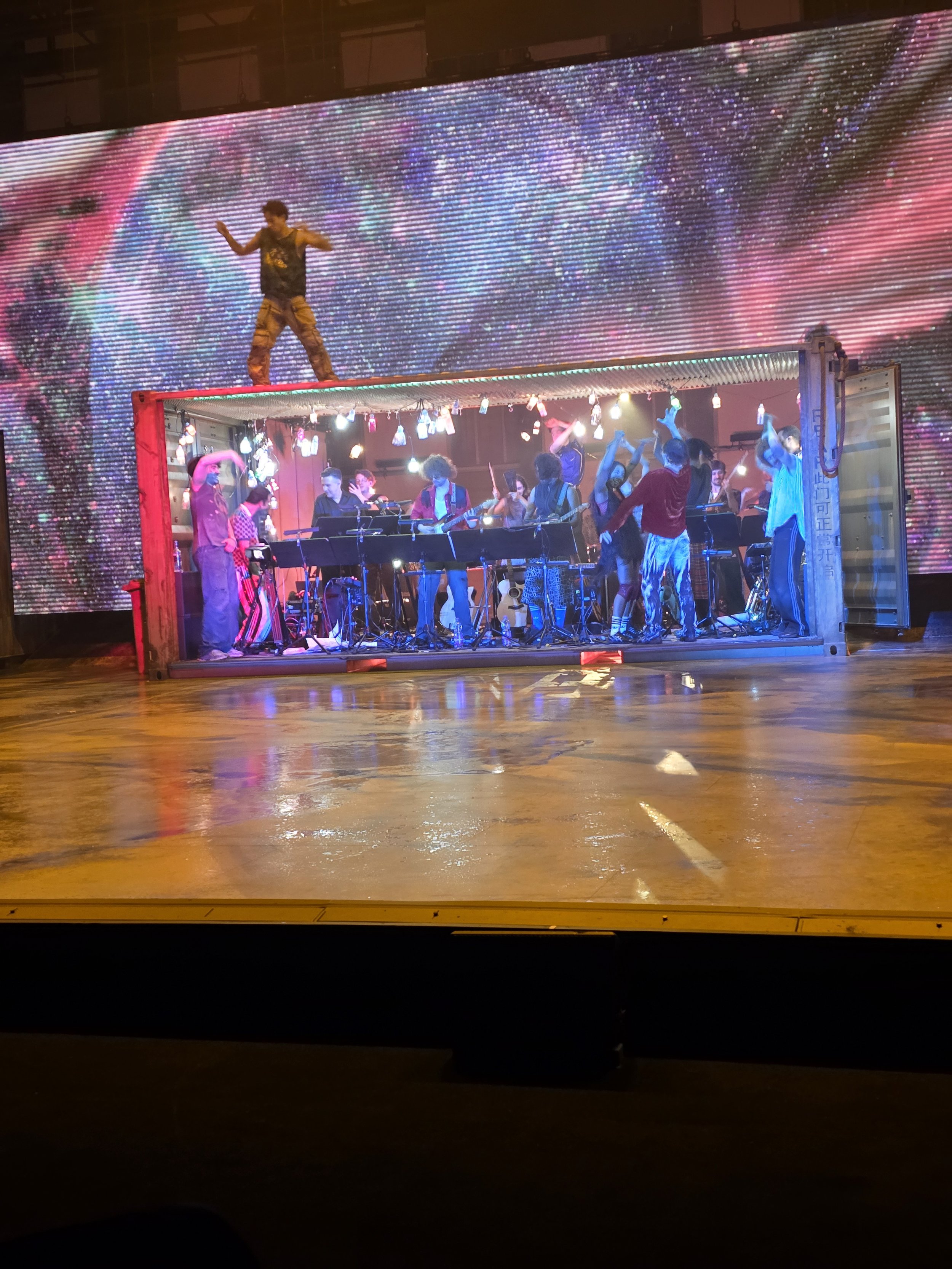
Finally - and this feels, to me, like a small piece of justice more than thirty years after the album was critically savaged - there is the crucial influence of the 1995 album 1. Outside. No fewer than four tracks from this album, together with songs from Diamond Dogs, form the connecting thread running through Rebel Rebel. After a lovely warm-up with the Holy Grail of Bowie's live catalogue - Sweet Thing, never performed live by Bowie after 1974 despite (online) pleading from his fans - several tracks from Outside go on to steal the show. We Prick You sends the wildly dancing gang members into ecstasy with their brutal vigilante energy, and I'm Deranged, performed beneath a swinging hanging lamp, is the crowning moment of Daniel Donskoy's extraordinary performance. Surprising is a version of Hallo Spaceboy stripped down to acoustic guitar and flute, almost unrecognizable until the minimalist lyrics of the song kick in. For a moment you fear Henry Hey has robbed us of the original version. But when, toward the end of the show, the apotheosis finally arrives on the first thundering beats of the original Hallo Spaceboy, the musicians, dancers and lead performers underline just what a "dumpster fire" of a track this is, in every sense! Through this reprise, Hallo Spaceboy lands as a double punch: you still remember the modest version, while now it storms across the stage. Out of the ruins of this chaos, The Motel emerges as the keystone of the production, in which Boy and Girl rise up. Bowie himself, during his 1997 performance at Amsterdam's Paradiso, called The Motel ‘probably a love song to desperation’. Through its placement within Rebel Rebel, these words fall perfectly into place. With a more dominant role for the saxophone (played by Marc Doffey) instead of Mike Garson's jazz piano, the audience got a twist on the familiar. Incidentally, Hey kept a fairly tight rein on the songs throughout, which made the moments where a track did break loose from the arrangement feel all the more special. Well dosed, with the audience on the edge of their seats. Love triumphs, and Golden Years arrived with the closing number of the same name.
Interpreting Bowie after his death
We spoke with Henry Hey earlier that day for an interview. We mused on the fact that David Bowie has now joined the ranks of legends like Elvis Presley, though perhaps even more fittingly: Beethoven, Mozart. Artists, composers no longer among us to offer their own interpretation of their work. It now falls to others to pour their own sauce over Bowie's work. We are witnessing a first generation taking on that task, Ivo van Hove and, in his wake, Henry Hey among them. People who once worked with, artistically argued with, brainstormed with Bowie himself. At the same time, the work is being performed by people who stand far removed from Bowie - the musicians, the dancers, with their own vision. No one holds exclusive rights to the interpretation of an artist who can no longer speak for himself. There will, hopefully, be many more generations of makers pouring their own sauce over Bowie's work still to come. Rebel Rebel is one of them, not the last.
My tentative conclusion after the thoroughly satisfying Rebel Rebel is this: in the chosen setting, David Bowie's body of work seems to have become homogeneous. From the strange We Are Hungry Men to the swinging Golden Years, it all fits together. It works. It delivers. Certainly when combined with more disciplines than music alone, the story, its expression through the athletic dancers, it all adds up to more than the sum of its parts. But whether that will still hold true in fifty or a hundred years, in the hands of a generation that never experienced Bowie firsthand -that is a conclusion I cannot yet write.
TOM VAN ENGELEN, © Concertology, AUGUST 2026