Kevin Armstrong
Far from Absolute Beginnings - An interview with the world’s best least-known guitarist
Just imagine. You live in a downtrodden apartment somewhere in London but life is not so bad. You know you have a helicopter waiting, to take you – an aspiring young guitarist – to play at a charity concert. But not just any charity, and not just any concert. Because the date is Saturday, July 13, 1985, and the flight will take you to Wembley Stadium. Your name is Kevin Armstrong, and somehow you are David Bowie’s bandleader for the day.
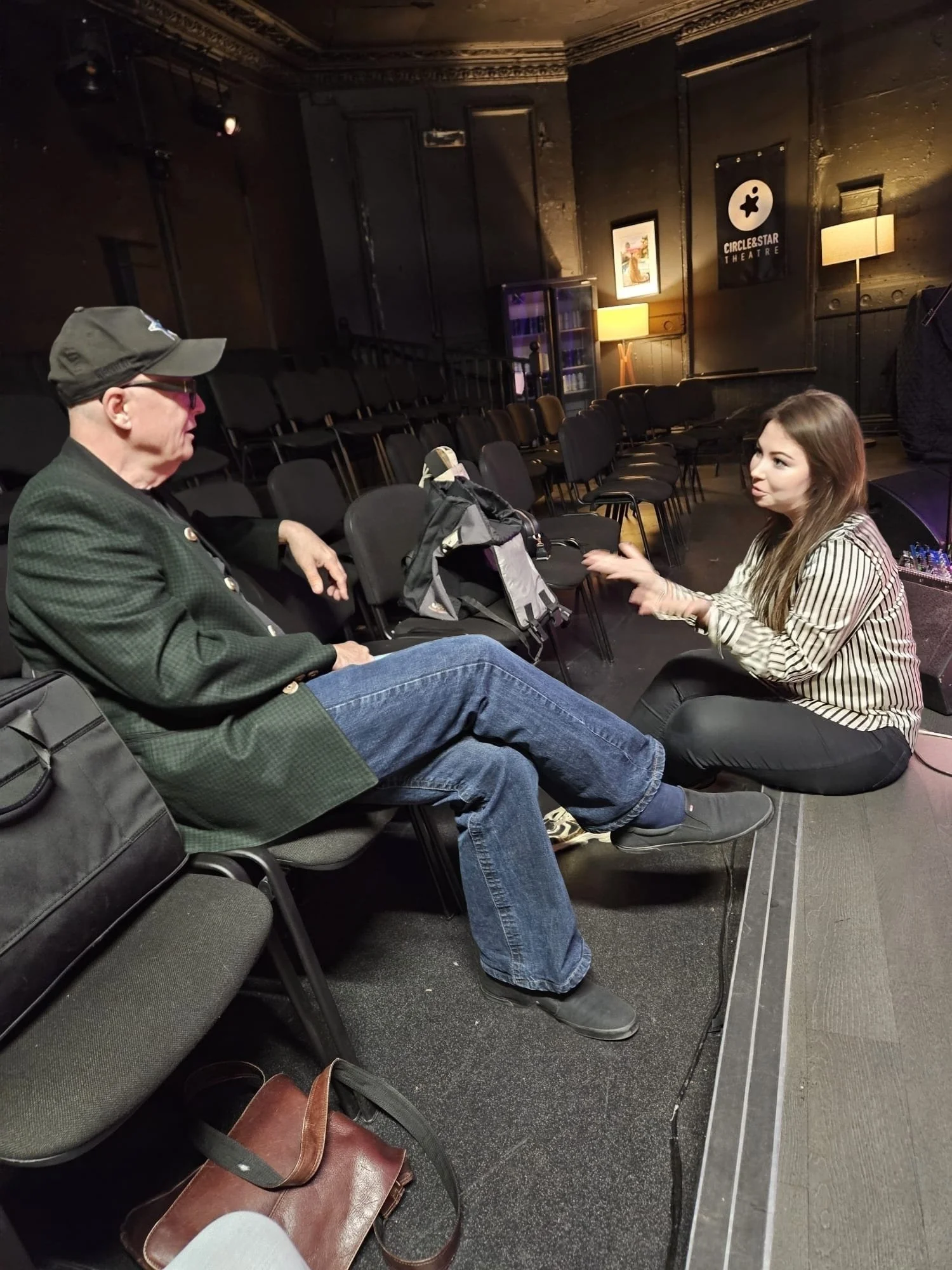
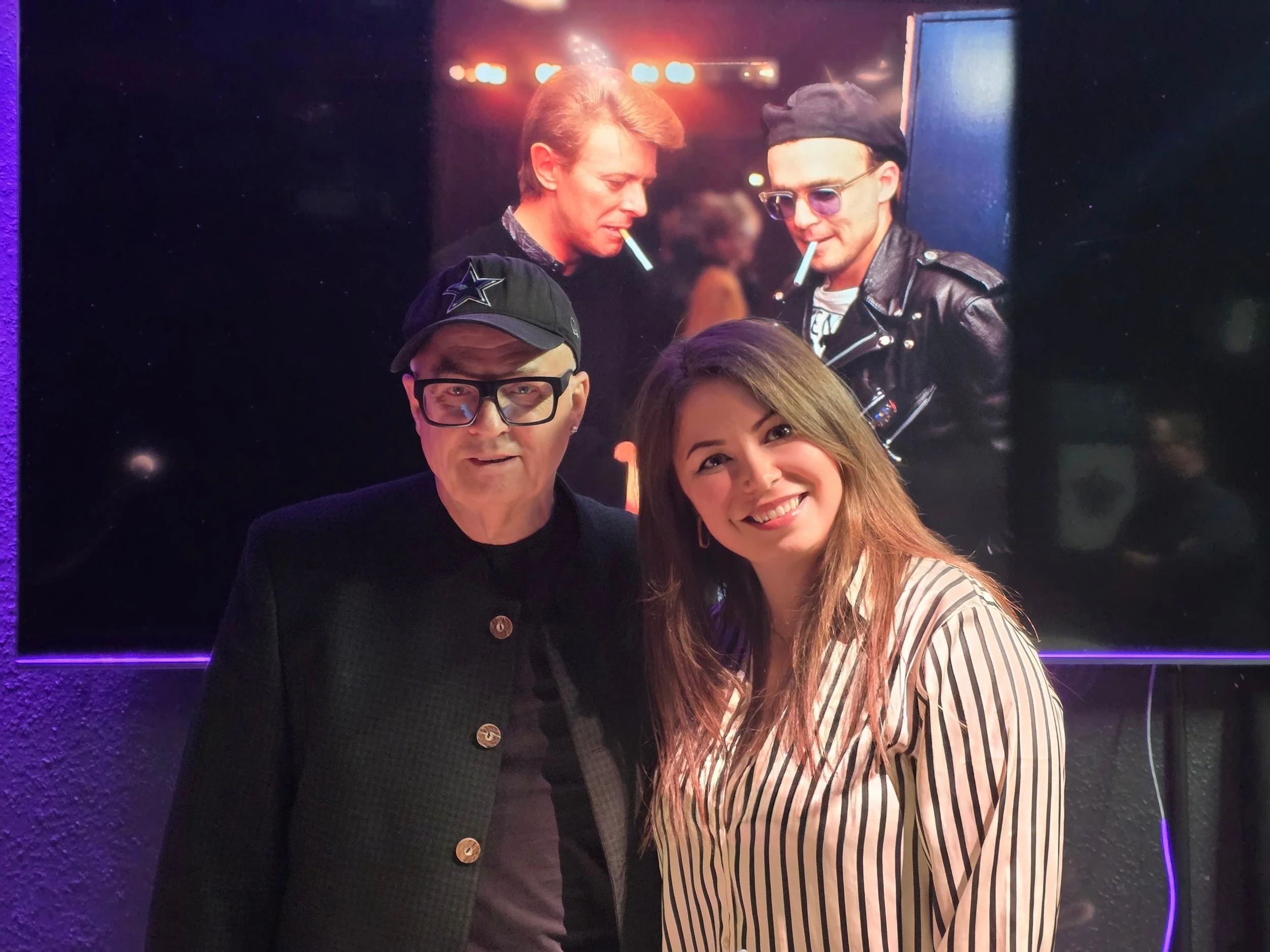
There are worse ways to come into the picture of the broader music world than to debut on Live Aid! A set of songs with Bowie, watching Queen play their kind of magical set from the side of the stage, and recording “Dancing in the Streets” later, not only with David Bowie, but also with Mick Jagger. It is a career kick-off that brings Kevin Armstrong into orbit with artists ranging from Iggy Pop and Paul McCartney to Roy Orbison and Thomas Dolby. It has been 10 years since David Bowie switched the temporal for the eternal. Kevin wrote and published a book with the fitting title “Absolute Beginner”. Concertology was kindly granted a meeting with him just before his performance at the Circle&Star Theatre in Hampstead, London.
“Absolute Beginner” came out in 2023. Did publishing the book give you the peace of mind you might have expected from it?
The nicest part of something that you started is actually finishing it. You can let it go, stop worrying about it, and then it becomes something that is not yours anymore. You draw the line, it is out there, and that was a very good feeling, yes. It is comparable to making an album. The book fits in with the idea of the show I am doing, which took off some years ago, or maybe even soon after Bowie passed away. At that moment I was in Iggy Pop’s band playing gigs. Bowie’s passing was a fitting moment, and I also felt that there is an audience out there, of a certain age, that would appreciate my story.
Speaking of Iggy Pop, you worked a lot with him, you worked a lot with David Bowie. Did it require a different set of skills to work with either of them?
Not so much. I am there to serve the artists’ needs and to me it is basically the same process. Learning songs, make a contribution to material, playing live. Of course both Iggy and Bowie had their own styles, but most importantly you have to be able to get on with people. Do your job. In the end, everybody is different. Some guitarists can’t stand to play the same song every night, but I love to honour the original material. Get inside it, find out what it is made of, and then do it my own way a little bit. The audience will always recognise where it came from. I am a fan on stage and share the moment with the people, almost saying: ‘Look what I have done, I have got inside Robert Fripp’s head!’ I played with the DAM Trio last year – the group around Carlos Alomar and George Murray reviving the Bowie Berlin period – and during the very last show in Bristol, Robert Fripp came to see us. I could not miss him, he was the only one wearing a tie in the entire audience! He endorsed us. I was not nervous, the work had been put in, the preparations were done. I was confident.
In retrospect, David Bowie often described his musical career after the massive success of “Let’s Dance” in 1983 as his low point. He feared turning into the next Phil Collins. Was this mood noticeable already for you as a musician, while working for him and creating arguably his most beautiful track of the 1980s – “Absolute Beginners”?
I met David on the day the demo for the song was finished. We worked in the studio for hours and I did not really get to know him until later. I know he wanted to throw everything in the air and do something … else, by the time Tin Machine was formed. But my relationship with him was a daily working relationship, in the studio, on the stage, whatever. We did not go and have handwringing conversations about creativity. Perhaps TM-guitarist Reeves Gabrels did, but I did not. I was there to do the work necessary. His struggles were unknown to me. He seemed always a very optimistic and energetic person to me.
As a musician coming up in the 1980s, you have witnessed quite a few eras in rock and pop. How do you observe the state of music today?
Well, we have entered the age of AI, haven’t we? Who knows what will happen. There are a lot of original musicians coming up, doing great things, but the mainstream of music has never been worse. I just can’t turn on the pop radio anymore. Life goes on, we moved through certain eras, and that is why I do what I do, with my own show. For people who appreciate where we have come from. It was a golden age. The work I did with Thomas Dolby was very technical and rewarding, I learned a lot from him. Bowie and Iggy on the other hand worked very quickly, no close examinations, but just go in and play the parts. The core group that made Iggy’s “Blah blah blah” album was very lean, just Iggy, David, multi-musician Erdal Kızılçay and the engineer Dave Richards. And me. I would play and ask: ‘Will that do?’ Yes it will!
On the day of our conversation, Kevin Armstrong just received the copies of his second solo album, called “Orphans”. We heard a couple of tracks from this new work during the show, and loved the atmospherics of it. On his website, Kevin says: ‘It was recorded at Wishing Tree studio in East Sussex between 2019 and 2026. No AI was used in the writing, recording and mixing of this album, it is entirely the product of fallible human endeavour.’